2018年3月25日 星期日

“A right time" – movie review


                                https://www.facebook.com/CinemathequePassion/posts/694995250624651


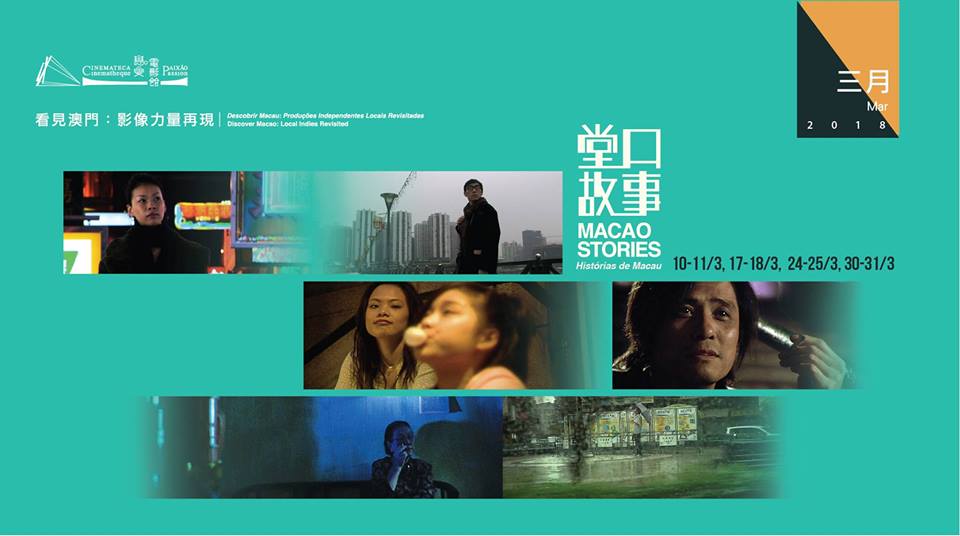
There is a time for everything. This concept, implied in a Bible quote beginning with the verse "To everything there is a season", is the theme for the movie "A right time" (有時), one of a series named “Macau Stories”.

Though the concept may imply that life is decided by forces beyond our control, it does not set a sad tone for the movie. Quite on the contrary, what happens to the three main characters shows how people, and, in this case, Macau people, respond to inevitable situations with a come-what-may attitude and with the readiness to make the best move when the right time comes.

Ah Ming, for example, decides to clear up the mess in his home. This somehow symbolizes his realization that it is time to organize his hitherto disorderly lifestyle. An old woman, Ah Ming’s neighbour and also his mother’s friend before her death, understands that the time has come for her to prepare herself for life in a care home though she is still in good shape. A teenage girl, seemingly hanging around doing nothing serious, finally grows into a mature lady, thus suggesting that the right thing happens at the right time.

This story, simple but refreshing, weaves through the three characters and brings them together at certain moments of their lives. What causes their paths to cross is their shared interest in photography. Their interaction throughout the story appeals to the viewers with the fun of photo-taking. With the camera in hand, they spread cheer to people around them. Apparently, photography is of central importance in the movie, which starts with a few snapshots and ends with an exhibition displaying those taken by the teenage girl in replacement of the old woman’s lost ones. What is the link between photography and the main concept about the inevitability of life’s realities? Could it be the director’s intention to show that though there seems little we can do to decide about the time when something happens, we can, with the help of the camera, capture the moment while it still lasts?

And the three characters are fascinating on their own. Despite his nonchalant personality, Ah Ming is actually a very caring person. He pays regular visits to his mother’s tomb and looks inside through the gate every time he walks past the old woman’s home. The lovely smile on the old woman’s lined face makes one think that there is nothing scary about ageing. And I take great delight in the very careful description of the young girl’s fondness for her idol, the photographer, whom she addresses as “Ah Sir”. She would sit hidden in a quiet corner watching Ah Ming arranging the bouquet on the tomb and later go and trim the stalks with a prepared knife. She would even try to detect his presence at home by looking up at the lighted window.

It being one of the Macau stories, there is reference to some of the city’s changes since the Handover. This inspires us to reflect on the Bible quote from a broader perspective: there is a time for the end of an administration and a time for the beginning of another. 


There is also frequent appearance of a Macau landmark and its vicinity. I marvel at a touch of humour in the word choice for the label of a photo of this landmark displayed at the exhibition mentioned above. It is “Neither 3 Nor 4”, which is of a very interesting meaning if interpreted in Cantonese (不三不四). To find out which landmark this is referred to and why, you can come to watch this movie and the other four of the series.

2018年3月5日 星期一

Reflections on the movie "Passing Rain"


Language teachers sometimes ask their students to tell a story about a given picture to encourage creative and associative thinking. When presented a picture such as the one above, can you come up with any story ideas? Not easy, is it? That was how I felt when offered this postcard at the entrance to the filming room. Could any link be established among such images as a clown, a man holding an unlighted cigarette, a boy in a raincoat, a battery, a ring and a bitten apple? But these, as I later found out, are the very small yet important details that make up the story of “Passing Rain”, a movie I enjoy very much.

There are scattered shots in the movie that may be a bit puzzling in the beginning when the viewers are still unfamiliar with the various characters and scenes. For example, the driver who keeps trying to light a cigarette is suddenly seen to be playing the guitar with a hand bandaged. When and how did he sustain the injury? Outside the funeral home, a tall girl offers to help a lady seemingly suffering from pain due to her pregnancy. Whose funeral has the girl just attended? A child in high spirits throws a battery up to the sky murmuring something about a space-shuttle soaring. Will the battery fall and hurt him? The scene changes before we even have time to harbour any doubt. As shown on the above mentioned postcard, there seem to be puzzle pieces waiting to be put together to form the complete picture.

As the story proceeds, however, the doubts clarify themselves one by one. The rotten apple picked up intentionally from the forgotten corner of the house signifies a mended relationship. The fall of the battery has indeed caused an injury, without resulting in a tragedy, though. The man’s wedding ring that ends up on another woman’s necklace may be a symbol of the latter’s determination to bid farewell to a rotten lifestyle. The related incidents are thus not all presented in chronological order. This is perhaps what makes the movie appealing especially for viewers who prefer films that go in strange and unexpected directions.

Albeit the characters may be strangers to one another, their paths cross. And on several occasions, it is a passing rain shower that brings them together. One such occasion is when the pretty woman from the mainland is seeking shelter from the rain at a church entrance while a few kids in yellow raincoats are guided in a queue down the street. Among them there is the lovely boy with his toy space-shuttle. The shots are, in fact, very well organized and presented to achieve the desired effect. And it is also clear how passing rain serves to establish connective links, hence the choice of the movie name.

The movie mirrors the reality of life in our city. What happens in it may actually be everyday occurrences in the vicinity of our home or workplace. We may take no heed of them just as we tend to be heedless of the passing rain. And, while there seems not much to expect from living in a city like ours, this is a movie with a lot of pleasant surprises right to the very end. It is a very good movie worth my enthusiastic recommendation. And I, in particular, appreciate the short positive message that comes after the closing credit roll. So be sure to remain seated till then.

2018年2月27日 星期二

A perfect butler … a brilliant novel


The book “The Remains of the Day”, authored by Kazuo Ishiguro, is one of a series of Nobel Prize winners a friend has kindly gifted me. I feel the urge to write a few lines about it as I have derived immense pleasure from its perusal. But, in all honesty, this is far from being a book review, which is beyond my ability. My intention is simply to recommend a good read to other English book lovers like myself.

As stated in the back cover blurb, the book presents a portrait of Stevens, the perfect English butler who had served for more than thirty years in Darlington Hall in postwar England. The main part of the story is a description of a country drive, during which Stevens embarked on a journey down memory lane. He recalled the remarkable events he partook in and the people he associated with in his long years of service, thus giving a picture of the social and political phenomenon of Europe in that era.

Initially, I found the story a bit monotonous. There is, for example, a prolonged account of the butler’s interpretation of the term “dignity”. I questioned his need for being so careful with details when explaining how his opinion differed from others’. As I proceeded with my reading, however, I gradually got a grasp of his sincerity in providing such explicit details. What he means by “dignity” borders on our understanding of an employee’s “die-hard loyalty” in the current terminology. Stevens’ father, a self-demanding butler before him, made strenuous efforts to maintain his work efficiency even during his last days. Stevens went about his tasks of serving the guests one evening without pausing for a moment to take a look at his father, who was reported to be taking his last breath. Such behaviour may be deemed as cold-blooded in today’s world when so much is talked about employees being treated with respect and empathy. But Stevens saw this as a butler’s dignity. This concept is, in fact, a main focus of the story and appears repeatedly even towards its very end. 

Impressed by the label “Winner of the Nobel Prize – Literature”, I had expected very difficult terms, complicated sentence structures and lengthy paragraphs. To my delight, the story displays the beauty of the English language in its simplicity. It is, nevertheless, not short of beautiful words and phrases, which I appreciate so much that I have made a list of them for keeping just as I did as a school girl ages ago.

Yes, this is a brilliant novel, one I would talk more about if invited to.


2018年2月19日 星期一

Time to curb the masses of tourists


                     picture from "Macau Daily News"

The huge number of tourist arrivals has made headlines these days.

Pictures of tourists packed like sardines in the streets are a terrible sight. They remind me of my own experience some years ago.

I was travelling in a place named 周莊, known for being a collection of beauty of China's water townships. I had seen it in pictures and been craving to be there myself. But that experience was horrible beyond words. What could have been charming sights were all hidden behind the masses of tourists. Instead of admiring the scenery, I was forced to spend most of my time walking along a narrow lane lined with shops thronged with bargaining tourists. What made things worse was that the serenity of the stream, so charming in the pictures, was spoilt by the singing of village women rowing long narrow boats, cheap imitations of the Venetian gondola!

I also recall an incident in Tibet a number of years ago. With the opening of a new railway linking Tibet to 1.3 billion people in other parts of China, the increasing number of tourists was found to be threatening the security of the Potala Palace. It was becoming harder to safeguard the jewel of Tibetan Buddhism, the symbol of Tibet.  Efforts were needed to stem the rising tide of visitors.

What about our own city, where tourism has long been an important sector of the economy?  I wonder whether mass tourism is a blessing or a curse. In fact, while the spending of the tourists may be a welcome boost to Macau’s retail business, there are a lot of complaints about its adverse effects. Imagine its interference in the daily lives of the local citizens. We cannot turn a blind eye to its negative impacts on the local transport, social security, the environment and our cultural heritages. Even if we do not mind the long wait for a taxi and the contaminated environment, it pains us to see the damage done to our treasured heritage sites.

In addition, mass tourism could ruin Macau’s reputation as a tourist destination. What fun is there travelling in jam-packed streets? My unpleasant experience in 周莊 is enough evidence.

It's high time the government took action to curb the masses of tourists descending on us every day.

2018年1月31日 星期三

What happened in the operation theatre


I underwent a cataract surgery on my right eye eight years ago. That was why when it was my left eye’s turn last Tuesday, I was at first quite sure of my calmness, claiming to be well familiar with the procedure.  However, as the wheeled stretcher was on the way to the operation room, moving past walls and doors, in and out of lifts, I found myself saying the “Hail Mary”, just as I had done eight years before. In fact, my confidence was slowly diminishing.

On arriving at a brightly lit room, obviously the operation theatre, I heard a kind voice saying good morning to me. Though the face was half masked, the big pair of eyes was seen to be smiling. Then I was told to move myself onto another bed, the operating table, above which there was a strong surgical light.

“Well done!” It was the same encouraging voice again.

With my eyes fixed on the ceiling, I could make out a few other voices, which undoubtedly belonged to the surgical team. They were heard going about their tasks seriously.

I could picture on my mind the scene of a surgical operation just like one I had so often seen on TV, except that instead of being the viewer, I was playing a part, too, as the patient. I felt adhesive patches placed on my chest. I understood this to be a device for monitoring my heart rate and respiratory rate. In addition, I also felt the blood pressure cuff fixed on my right arm and the nasal breathing tubes put on my nose. Finally, they placed on one of my fingers an elastic band aid assumedly attached to the pulse oximeter machine.

So how should I play my part well? I remembered Dr. Leong’s advice during the consultation prior to the surgery: “All you need to do is follow my guidance and act accordingly.”

I could claim to be a very cooperative patient capable of enduring slight physical discomfort. It was thus decided that the surgery would be performed without the use of injections for anesthesia and without the need for stitches. Eye drops would serve the purpose instead.

Never had it occurred to me, however, that there were parts of me that were less physically submissive. I had maintained my calmness so far, but just as I thought the surgery was about to start, I heard voices of anxiety commenting on my blood pressure. It must have been the stress of the anticipated surgery that had elevated my blood pressure acutely!  

“Have you taken your blood pressure pill?” It was Dr. Leong’s voice this time.
“Yes, I did, last night.”
"Breathe deeply and try to relax."

After some time my blood pressure reading was reported to have gone down satisfactorily. The surgery thus started. During the entire process, I was listening attentively to everything going on. As instructed, I kept looking straight at the ceiling. At first the microscope light was very bright and then it gradually went dim. Water was poured onto the eye from time to time. A lot of water was used at one moment and I learned later that it was the time when the cataract was being removed. Every now and then, I heard someone reporting my blood pressure readings. 
“Just like what is done in some TV shows,’ I thought. 
“Think of something delightful,” the encouraging voice was heard once again.

With some effort, I managed to fill my mind with some pleasant memories. Then I heard Doctor Leong’s voice, “Now this is the intraocular lens insertion process. You’ll feel a bit uncomfortable.” For the rest of the time, in spite of the slight pain, I felt more relaxed, assured that my blood pressure was causing no more trouble.

The surgery was a success. I heard voices again, now cheerful and excited. The surgical team must have been rejoicing in their accomplishment of yet another challenging task. How I wished I could sit up and thank them personally for their effort.

Indeed, the medical team deserves my heartfelt thanks for their efficient and dedicated service during my three-day hospitalization. My special thanks goes to Dr. Leong Chan (梁珍醫生), the Chief Surgeon, to whom I owe much for her professional care for my eyes over the past years and particularly for her highly skilled performance of the surgery. 

Not to be forgetten, is, of course, my gratitude to God for his presence and blessing throughout the surgery. Thank you, Lord!

2018年1月15日 星期一

Movie review - "Columbus"


picture from https://www.facebook.com/CinemathequePassion


Compared with the name “Columbus”, the Chinese name,《築動心靈》, with the first word implying the involvement of architecture, seems a more explicit representation of the theme of the movie. How architecture can touch the heart, as the name suggests, was what first inspired me to make the choice among the list of American movies scheduled for screening in this month of January.

 
Actually, the English name is well chosen as Columbus is a city famous for its many modernist buildings. Construction is presented as striking backdrops throughout the story. Buildings are part of life in Columbus. People from all over the world travel there to be on guided architecture tours. There is much discussion about these buildings between Jin and Casey, the leading actor and actress. In fact, it is the architect of a much-talked-about building, though unwittingly, that has brought the two together as Jin is his son while Casey is a student in his class.


However, the movie is more about how the heart is touched. Jin, who has frequent deadlines to meet, has to put his translation work aside to visit his father who has fallen into a coma from which it is not known when he will ever wake up. Casey, a young architecture enthusiast who works as a page at the local library, has to delay her plan of further studies because of her obsession about her mother’s meth problem. The two meet accidentally, thus initiating a friendly, romantic relationship. They gradually become soul mates, pouring out their troubles to each other. This is somehow different from what I understand about the genre of American movies, which are often typified by instant love and quick sex. I am hardly aware of a sex scene and if there is, it is presented in an implied manner. And when they say good bye to each other, nothing more than a heartfelt hug passes between them. The romance between the two is chaste; it is a tasteful romance that sees the value of friendly relationship between men and women as key to something deeper. This is a pleasant surprise to me.


For a person with a particular fondness for documentary movies, “Columbus” inspires me with its natural, true to life approach to the story. I cannot remember any of the dramatic elements except for the catastrophic collapse of the renowned architecture scholar during a speaking tour. Columbus seems an everyday- story movie with the actor and actress acting out their own emotions. This is another attraction of the movie.


Though a lay person to the film industry, I found myself slowly learning to read the mind of the director by interpreting the meticulously chosen angles. I also gradually got used to the scenes that are shown repeatedly without the appearance of the actors. Such an intellectual approach to the story makes the movie more enjoyable than most of the others that seem too intent on making the story clear and precise to the audience.


The movie may seem slow to some viewers and I will not deny having to fight drowsiness for a few brief moments. But this does not make the movie any less worth seeing. At least, it well merits the time I’ve spent writing this review.

2018年1月7日 星期日

Reflections on the movie "Radiance"

Picture from https://www.facebook.com/CinemathequePassion/

For people who see movie viewing as a mere source of amusement, “Radiance” may not be very appealing. It is somehow inadequate if entertainment is what movie viewers are looking for. It is not even emotionally engaging, not initiating laughter or drawing tears, or sending chills down your spine. As I see it, it is more like a literary piece with a faint touch of romance, one you would enjoy reading for the mere sake of its artistic value and for its pacifying effect on your mood amidst the disturbances of daily life. However, the film does arouse some positive thinking about the attitude towards life and on life itself.

Nakamori (Masatoshi Nagase) is among the “viewers” in a panel supervising the first draft of a movie commentary text Misako reads out aloud to be evaluated about its effectiveness as verbal support for the visually impaired audience. Once a professional photographer, Nakamori is particularly critical of the verbosity of Misako’s text. With the eyes open, he wants to prove to himself and to the others that, though semi-sighted, he is capable of watching the movie being screened. He still keeps his camera and makes attempts to take photos of some kids. He gropes his way along the streets, bumping into obstacles and once even slipping over a pool of vomit. This is all due to his refusal to accept his gradual sight loss. Towards the end of the movie, however, he is seen enjoying the movie with the eyes closed, allowing himself to be guided along by Misako’s commentary. He uses a walking stick, too, pacing up and down the streets with greater confidence.

We viewers are thus inspired that nothing in life is permanent. And when something is slowly disappearing, be it health or love, what is left for us to do is come to terms with the loss and try to move on in life with renewed energy and confidence.

This concept about everything in this world being temporary is also implied in a key line of the movie: “Nothing is more beautiful than that which disappears before our eyes”. It appears several times in the movie, hence some sort of a guiding ethic. Misako also talks about her futile attempt to run toward the sunset and capture the light for keeps. We thus understand that something is beautiful mainly because of its brief existence and the peak of its beauty is the moment when it is disappearing. Therefore, we are to treasure it while it lasts so that we will not later lament its loss.

As the name “Radiance” suggests, there are a lot of focuses on light presented in various scenes. Having seen the movie, I realize that it is a blessing that we can still enjoy light in its various beautiful forms and that we should not take our power of sight for granted. I am also grateful that I can watch this thought provoking and reflective movie without the help of an audio commentary.